

A log basket for the fireplace is one of those things you only think about once the first chilly evening drives you into the living room and the logs need to go somewhere. More often than not they end up on the floor, in a cardboard box or in a carrier bag by the door – and two days later there is bark, sawdust and little splinters all around the hearth. One well-chosen container is all it takes to keep that corner of the house looking tidy all winter long.
In this guide we show you how a wicker basket differs from a metal log rack and a wooden chest, how much wood is worth keeping indoors, how to place a crate safely next to a fireplace, wood burner or tiled stove, and which wood is actually good for burning. At the end you will find answers to the questions we hear most often every autumn.
We have been making crates in our family workshop since 2016, from pine, and every October we see the same thing: that is when most people go looking for something to keep their firewood in. No wonder – the heating season is getting going properly, and a tidy hearth comes in handy from the very first evening.
Why a wooden crate instead of a wicker basket
A wicker basket looks cosy in photos, but in everyday use it has a few weak spots. Wicker wears through, the sharp edges of the logs pull out individual strands, and bark and fine dust fall through the gaps in the weave straight onto the floor. After a single season many baskets start coming apart at the edges.
A metal log rack, on the other hand, is stable but completely open – everything that falls off the wood lands on the rug or the floorboards. On top of that, its cold, industrial look does not suit everyone’s warm, wooden fireside setting.
A wooden crate combines the best of both. It is rigid and stable, with fuller sides, so most of the bark stays inside, and it looks like a natural extension of the fireside atmosphere. Wood next to wood – it simply fits.
What you gain from a crate with rope handles
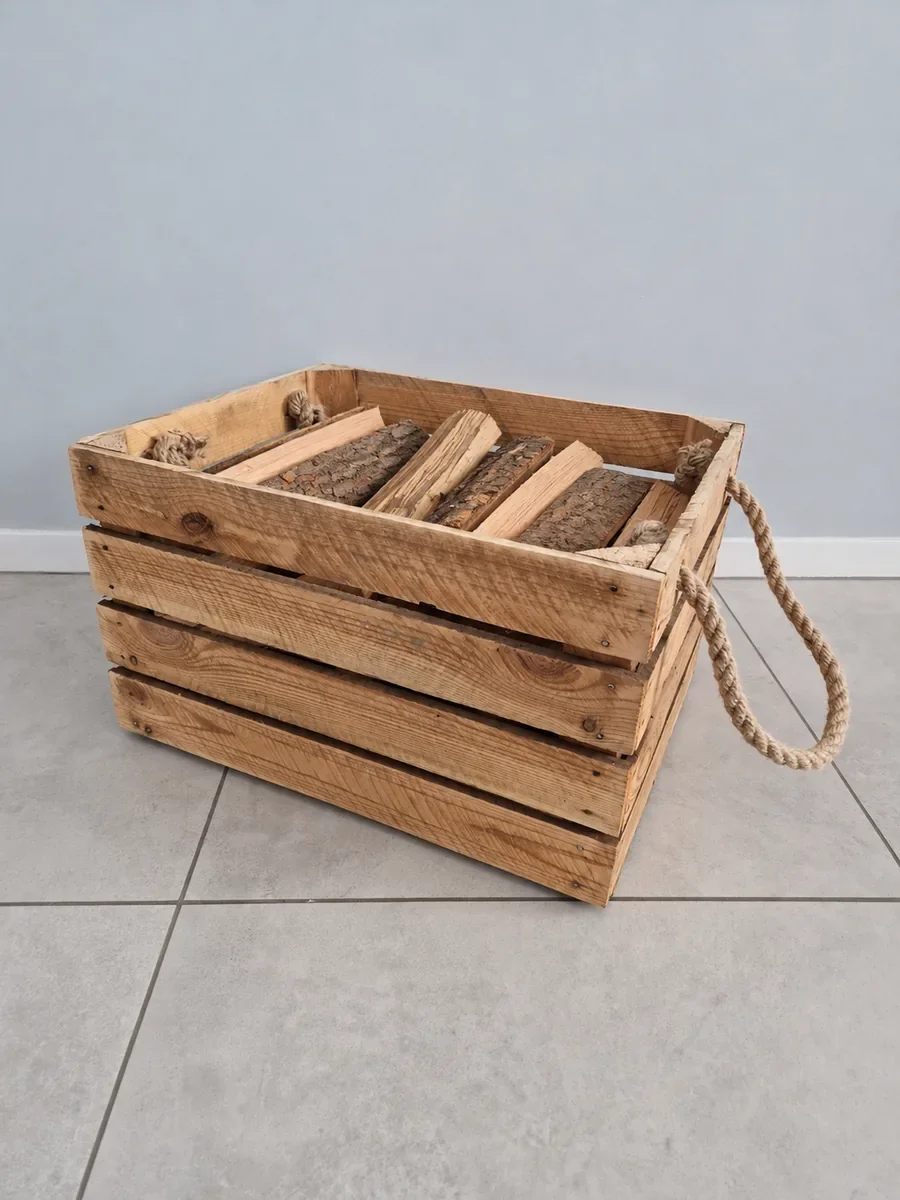
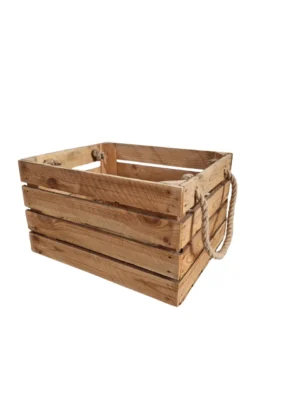
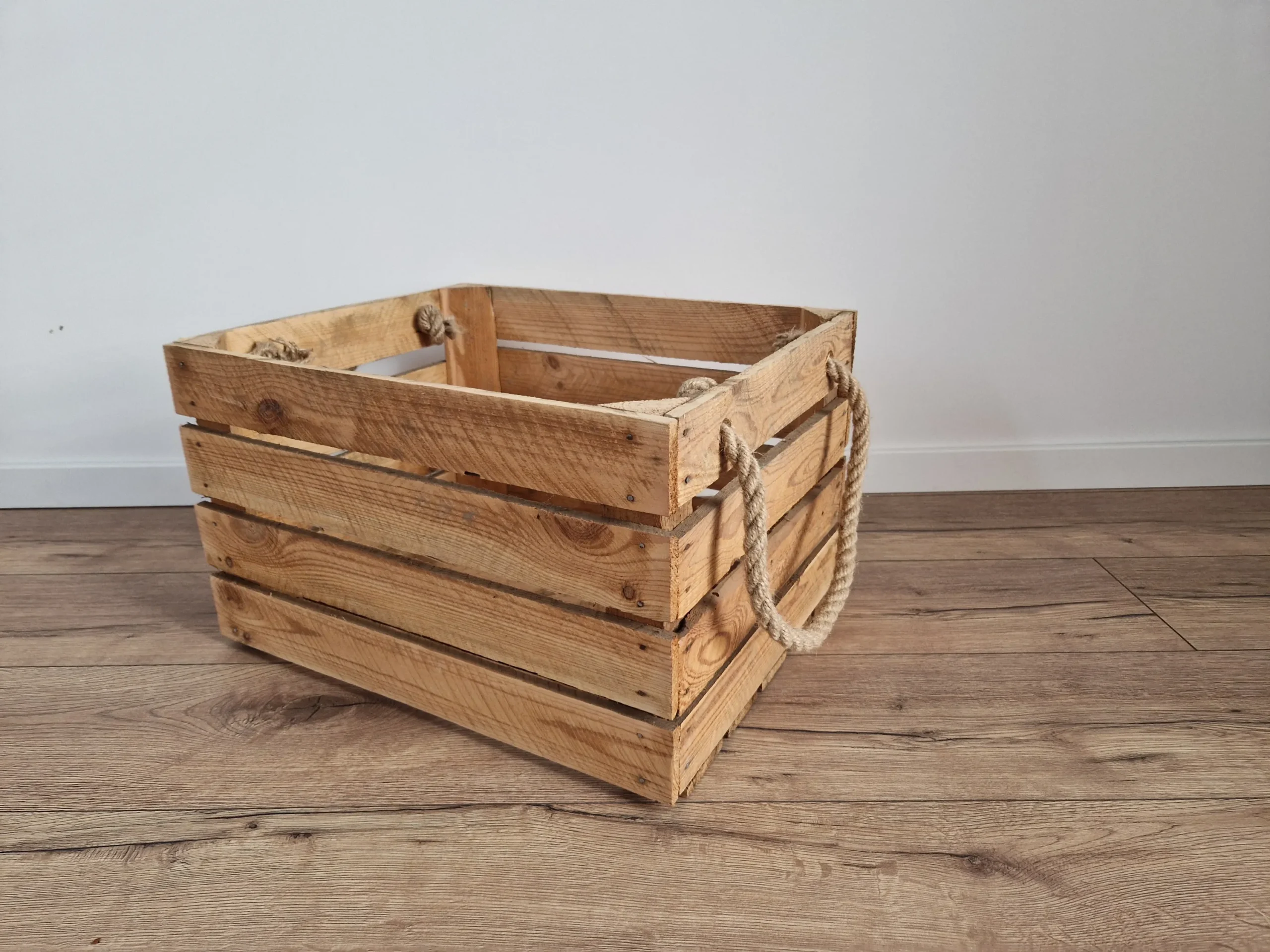
In practice, the most convenient container is one with handles. Thick rope does not dig into your hands the way a thin metal handle does, and the crate is easy to carry from the woodshed to the living room even when it is full. That is why our rope-handled firewood crate, 50×40×30 cm is the model that most often ends up by the fireplace.
- Stability – a flat base, so the crate does not tip over when you take a log from the side.
- Less mess – bark and splinters stay inside; just tip out the bits every few days.
- Easy to carry – rope handles on both sides, so two people can carry it together.
- Looks – burnt-effect pine with a pronounced grain goes well with brick, stone, tiles and white walls.
- No assembly – the crates arrive ready to use, so you can fill them straight away.
How much wood to keep by the fireplace
Almost everyone asks themselves this when they first organise firewood storage at home. The answer is simple: keep enough for 1–3 days of burning by the fireplace, and leave the rest in the woodshed, under a lean-to or in a dry garage.
Why not more? Firstly, wood from outside brings dust, bark and sometimes insects into the house. Secondly, a big pile in the living room takes up space and gathers dust. Thirdly, a small supply is easier to keep an eye on – you can see at a glance whether the logs are dry and clean.
How to work out your supply
- Count how many logs you burn in an evening. For occasional fires in a fireplace that is usually anywhere from a few to a dozen or so.
- Multiply by the number of days. If you top up from the woodshed once a weekend, you need room for 2–3 days.
- Add space for kindling. Small sticks, pine cones and firelighters are best kept in a separate small crate.
- If you heat with a wood burner or stove every day – put two crates side by side or choose a larger chest.
For most homes with a fireplace used for the odd cosy evening, one 50×40×30 cm crate is enough for one or two evenings. If the fireplace or wood burner heats the whole house, it is worth considering a sturdy chest or a set of two containers.
Storing firewood outside the house
The crate by the fireplace is only the last stop. For the logs that go into it to be dry and clean, your main supply has to be kept in the right place. A well-organised woodshed saves you work all winter.
Woodshed, lean-to, garage
The best place is a covered lean-to or a woodshed with open sides. The roof keeps off rain and snow, and the airflow lets the wood carry on drying. A garage or shed will also do, as long as it is dry and the wood is not lying directly on concrete.
- Do not stack wood directly on the ground – put pallets, timber bearers or bricks underneath so the bottom layer does not draw up moisture.
- Leave a gap from the wall – a few centimetres between the stack and the wall improves air circulation.
- Bark side up – lay the top layer of logs with the bark facing upwards so they act like roof tiles.
- Do not wrap it tightly in plastic sheeting – sheeting traps water vapour and the wood starts to go mouldy. Covering the top is enough.
Rotating your supply
Burn the oldest wood first, as it is the best seasoned. Stack new deliveries at the back or in a separate pile so you do not mix up fresh logs with seasoned ones. A rope-handled crate is doubly useful here: you fill it in the woodshed, carry it inside and immediately have a batch for the next few evenings, without carrying logs in your arms and leaving bark on the stairs.
If the woodshed is a long way from the door, a chest with a lid by the entrance is a good idea – a buffer for a few days. That way you go out to the garden for wood less often and only bring into the living room as much as you need at the time.
Basket, rack or chest – a comparison
Before you choose a particular firewood container, see how the most popular options compare in a few practical categories. Prices are approximate, as they vary with size and finish.
| Option | Price | Capacity | Dust and bark | Looks |
|---|---|---|---|---|
| OptionWicker basket | Pricelow to medium | Capacitysmall–medium | Dust and barkfalls through the weave | Lookscosy, but wears quickly |
| OptionMetal log rack | Pricemedium | Capacitymedium–large, stacked high | Dust and barkeverything falls on the floor | Looksmodern, industrial |
| OptionRope-handled crate 50×40×30 cm | PricePLN 169 | Capacityenough for 1–2 evenings | Dust and barkmost stays inside | Looksrustic, warm, suits a fireplace |
| OptionChest with lid 75×40×30 cm | PricePLN 369 | Capacityenough for several days | Dust and barkclosed, dust stays in | Looksa piece of furniture – bench, seat, storage |
A wicker basket works best as a decoration holding a few sticks. A metal rack makes sense in a modern interior where the wood is part of the display. But if what you want is everyday tidiness and convenience, a wooden firewood chest wins in almost every category.
Firewood crates for the fireplace



Which firewood crate to choose
Size matters most – it determines how many logs you can fit and what the crate will be used for. Standard fireplace logs are usually 25–33 cm long, so a 50 cm long crate holds them comfortably crosswise or in two rows.
| Crate | How many logs (approx.) | Best for | Price |
|---|---|---|---|
| CrateRope-handled 50×40×30 cm | How many logs (approx.)roughly 12 to 25 medium logs | Best foreveryday supply by the fireplace | PricePLN 169 |
| CrateBurnt-effect 50×40×30 cm | How many logs (approx.)as above | Best fora second crate, a log shelf unit | PricePLN 169 |
| Crate60×40×20 cm | How many logs (approx.)one or two layers of logs | Best fora low crate under a bench or in an alcove | PricePLN 149 |
| CrateWith lid and clasp 50×40×30 cm | How many logs (approx.)a dozen or so logs or kindling | Best forclosed storage, less dust | PricePLN 249 |
| CrateSturdy chest with lid 75×40×30 cm | How many logs (approx.)enough for several evenings | Best forfireside bench and storage | PricePLN 369 |
| CrateSmall 30×20×15 cm | How many logs (approx.)kindling sticks, pine cones | Best forkindling, matches, firelighters | PricePLN 59 |
| Crate35×25×19 cm | How many logs (approx.)a few smaller logs | Best forkindling, wood burners, holiday cabin | PricePLN 99 |
The 50×40×30 cm rope-handled crate – for every day
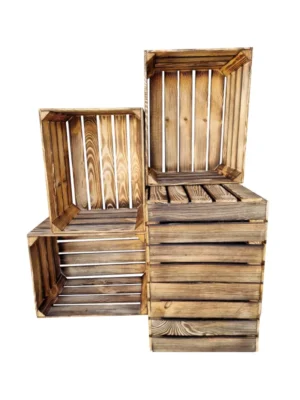
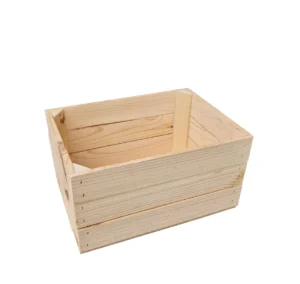
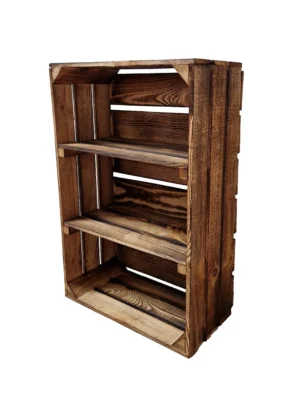
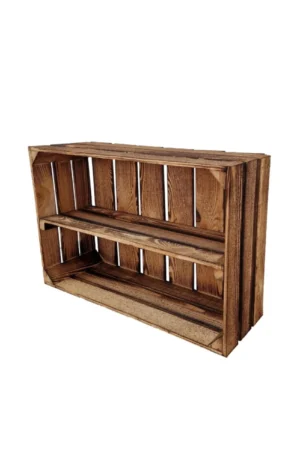
This is the most versatile choice. It holds enough for one or two evenings, has handles for carrying and does not take up much space next to the hearth. In the burnt-effect version, the darker wood nicely disguises the little marks from soot and bark that are unavoidable by a fireplace. If you do not need rope handles, a burnt-effect crate, 50×40×30 cm with cut-out handles does a similar job.
The sturdy 75×40×30 cm chest with lid – bench and storage
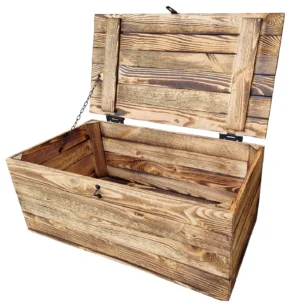
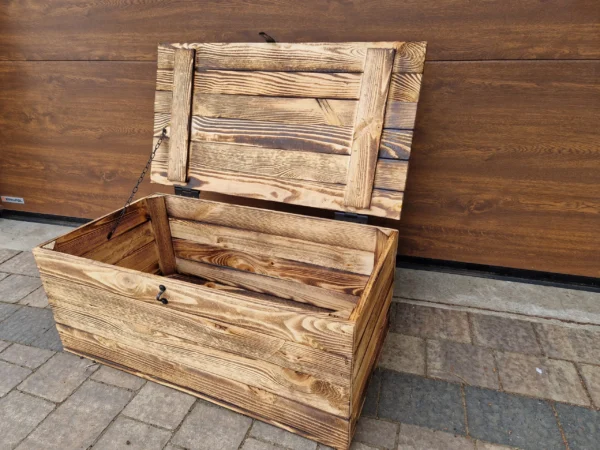
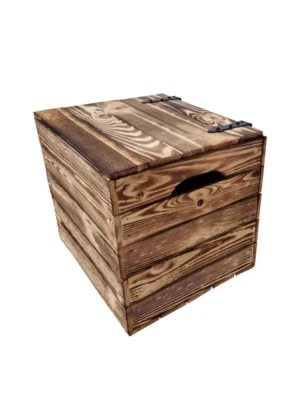
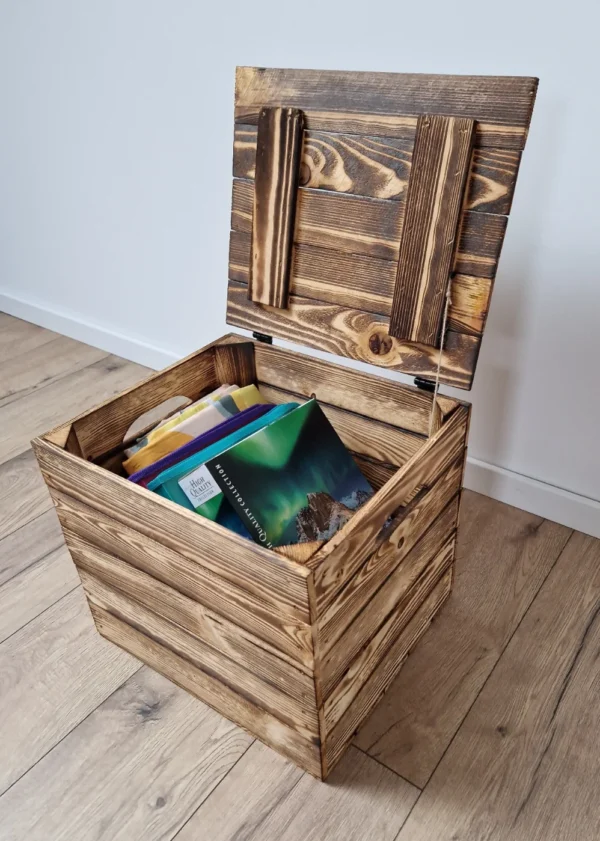
If you have a little more room by the fireplace, consider a sturdy solid pine chest with a lid. Closed, it looks like a low bench – you can put a basket of matches or a mug of tea on it, or lay a blanket over it. The logs go inside, and the dust and bark stay under the lid.
It is a good solution where the fireplace is the focal point of the living room and you do not want the wood on show all day. The lid is also handy in homes with small children and dogs who like pulling out sticks.
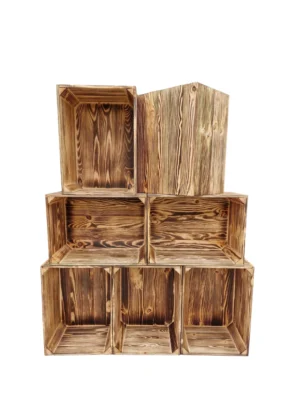
A shelf unit made of crates – logs in an alcove
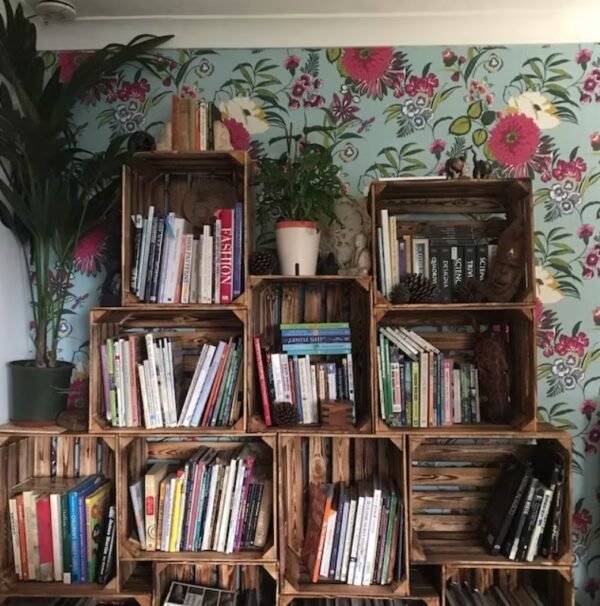
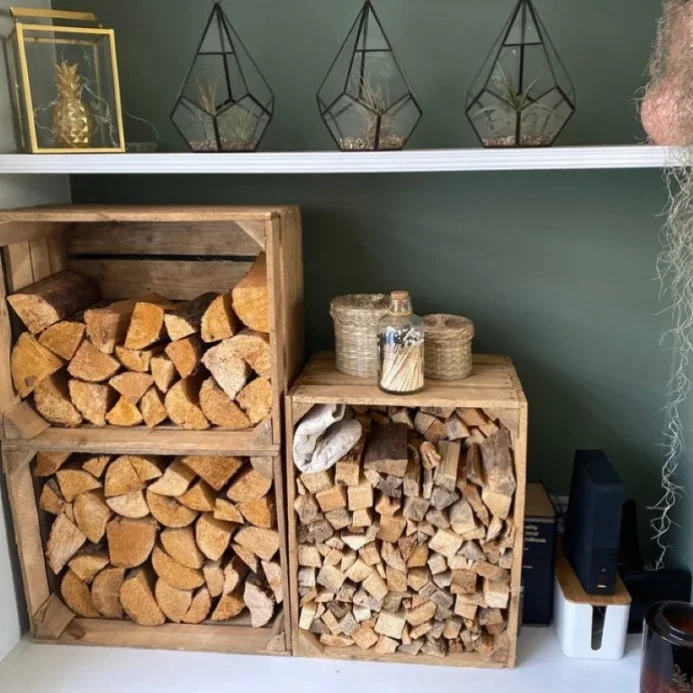
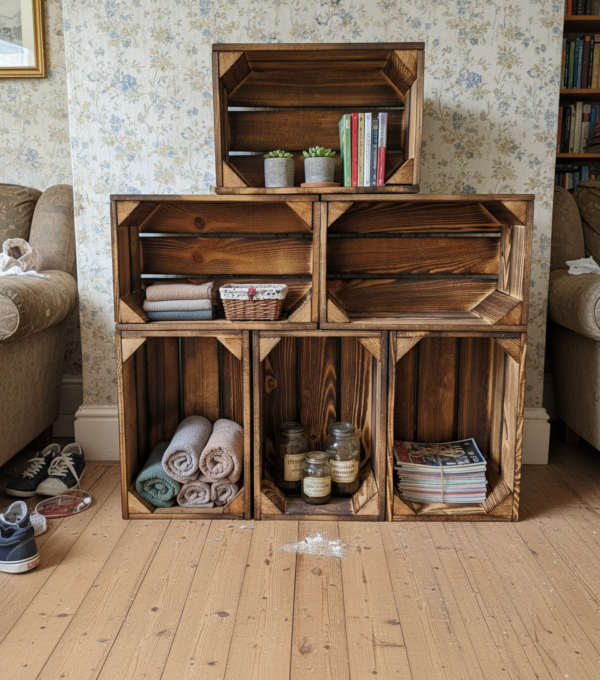
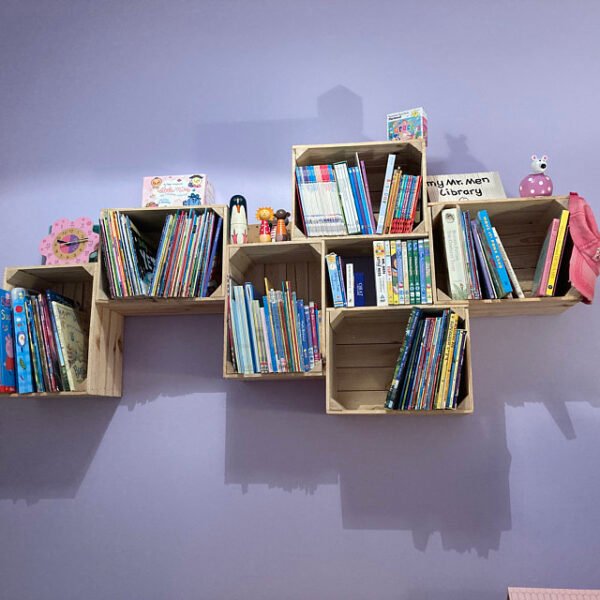
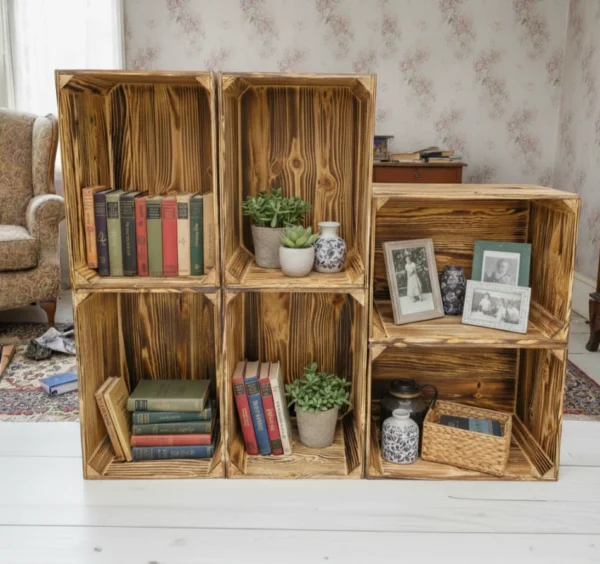
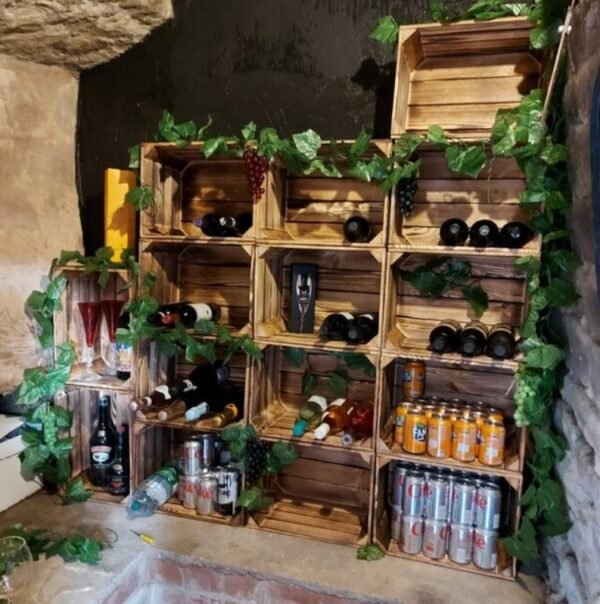
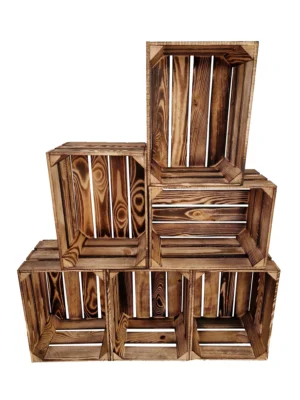
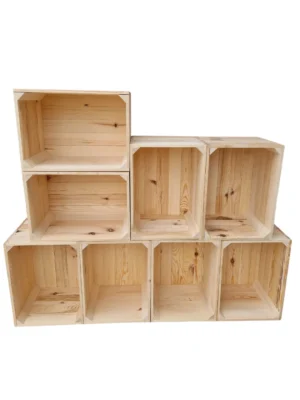
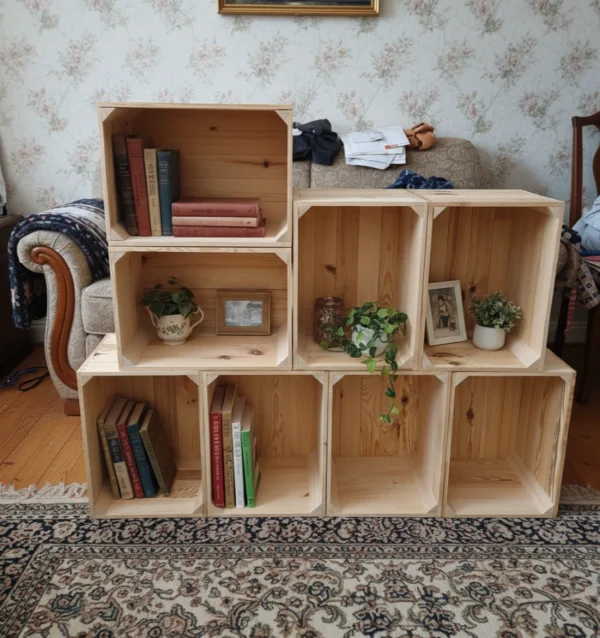
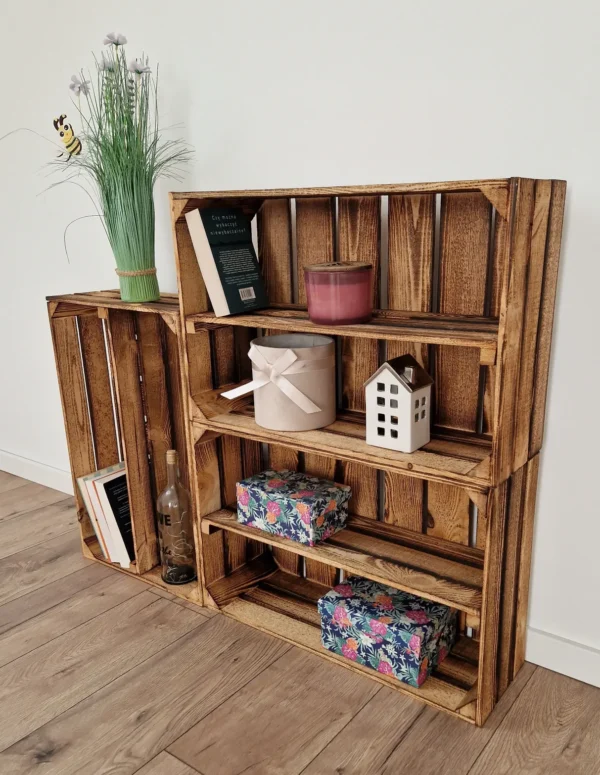
An increasingly popular idea is to stack several crates on top of each other, open side facing the room, so they form an open shelf unit filled with logs. It looks like a miniature woodshed and fills an alcove next to the fireplace or the space under the stairs beautifully. For this kind of build, the 60×40×20 cm crate works well – it is shallower, so the logs are visible from the front and the unit does not stick out too far.
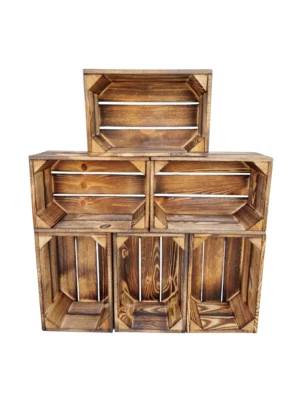
A set of 6 burnt-effect crates is also a ready-made starting point – you can fill some with wood and use the rest for kindling, newspapers and gloves.
A small crate for kindling, pine cones and matches
Kindling mixed in with the logs always means a last-minute rummage. It is much easier to keep it separate. A small 30×20×15 cm crate holds kindling sticks, pine cones, firelighters and a box of matches, while the 35×25×19 cm crate also fits rolled-up newspapers and a fireplace glove. You will find more similar models in the small crates category.
For kindling, matches and odds and ends
Ideas: fireplace, wood burner, tiled stove and patio
The same crate can look completely different depending on where it stands. Here are a few tried-and-tested ideas for placing a firewood container in different parts of the house.
By the fireplace in the living room
Put the crate to the side of the fireplace, not directly in front of the hearth – so it does not get in the way when you add wood and does not block the view of the fire. A set looks good: a larger crate of logs, a small one for kindling and a fireside tool stand next to them. Burnt-effect wood goes with stone and brick, natural pine with light, Scandinavian interiors.
By a wood burner
A wood burner usually stands closer to furniture and walls than a fireplace, and its body gets very hot. So place the crate at a clear distance, ideally on a non-combustible surface or to the side on a mat. A rope-handled crate is ideal next to a wood burner – you can quickly move it out of the way when lighting the fire.
By a tiled stove
In old houses and in the countryside, the tiled stove is still the heart of the home. A sturdy chest with a lid looks great beside it – closed, it doubles as a bench where you can sit and warm your back against the tiles. Logs and briquettes fit inside.
In a kitchen with a range
If you have a wood-fired cooking range in the kitchen, a smaller supply that you top up more often is useful. The shallower 60×40×20 cm crate slides under a worktop or bench, and a small crate next to it holds thin sticks for quickly heating up the hotplate.
In a holiday cabin
In a cabin on an allotment or by a lake, you usually light the fire at weekends. One or two crates holding enough for two days and a small crate for kindling are all you need. The crates are easy to move, so after the season you can use them to store blankets, board games or supplies.
On the patio and by the entrance
On the patio, a crate of wood comes in handy by a fire pit, barbecue or sauna. Just remember that wood – crates included – does not like constant rain, so place it under cover, on spacers, so the base is not standing in water. A sturdy chest with a lid by the garage door or the front door is a convenient stop for logs on their way from the woodshed to the living room.

Fireplace safety
A wooden firewood chest is just as combustible as the logs inside it. That is why a few rules are worth taking very seriously.
- Keep a safe distance from the hearth and the glass. We do not give one figure for everyone, because every fireplace, insert and wood burner heats differently – check the manufacturer’s instructions for your appliance, where you will find the recommended clearances from combustible materials.
- Do not put the crate right next to the embers. Especially with an open fireplace, sparks can jump further than you might think. The crate must not stand where embers fall when you add wood.
- Do not dry wood right next to the fireplace. The supply in the crate should already be dry – a fireplace is not a drying room.
- Keep kindling separate. Store firelighters, newspapers and matches in a closed or separate crate, further from the fire.
- Children and pets. A container with a lid discourages little ones from playing with logs and sticks.
Seasoned wood – moisture content up to approx. 20%
Only seasoned wood is suitable for a fireplace, meaning wood that has usually been dried under cover for one to two seasons. Its moisture content should be up to around 20%. Wet wood smokes, dirties the glass, leaves soot in the chimney and gives off much less heat. A simple wood moisture meter costs very little and lets you check every batch.
Insects and woodworm in wood from the forest
Wood from the forest, from tree felling or from a neighbour may contain insect larvae and sometimes bark beetles. In a warm house they can wake up and crawl out. That is another reason to keep only a short-term supply indoors – a few days’ worth – and leave the main pile in the woodshed. Emptying and vacuuming the crate regularly helps too – insects have nowhere to hide.
Practical tips for the whole season
A good crate will serve you for many winters if you look after a few little things. It does not take much work – more a matter of habits.
A mat or tray under the crate
Even the best crate will occasionally let a bit of bark through the gaps between the boards. A hearth mat, a piece of felt or a flat tray underneath protects the floor from scratches and makes cleaning up easier. On laminate floors it is also worth sticking felt pads to the bottom of the crate.
Clearing out bark and sawdust
Every few days, when the crate is almost empty, tip the leftovers into the fireplace or onto the compost heap, and wipe or vacuum the bottom. That way dust does not build up in the crate and insects have nowhere to hide.
Residue and darker patches
Over time the inside of the crate will darken from bark and dust – that is normal and gives it character. If a grey film appears, a quick brush with a dry brush is usually enough. The burnt-effect version is more forgiving in this respect, as small marks are less visible on it.
Protective finish – optional
The crates are ready to use straight out of the box. If you would like to give the wood extra protection, especially before putting the crate out on the patio, you can wipe it with wood oil or wax. Do this outside or by an open window, and wait until the finish has fully dried before placing the crate by the fireplace.
Which wood to burn in a fireplace
Even the prettiest log basket will not help if the fuel inside is wrong. In Poland, people mostly burn hardwood, which gives long, even embers.
- Beech – the fireplace classic. It burns evenly, gives plenty of heat and a lovely flame, and holds its embers for a long time.
- Hornbeam – hard and very high in calorific value, great for long evenings. It is harder to split, but worth it.
- Oak – very efficient, but needs long seasoning. It burns slowly and steadily.
- Birch – lights easily, looks beautiful in a crate thanks to its white bark and gives a bright flame. It burns faster than beech.
- Ash – burns well even after slightly shorter seasoning and gives an even heat.
- Softwood (pine, spruce) – contains a lot of resin, burns quickly and dirties the glass and chimney more. Better for kindling than as your main fuel.
A good habit is to keep hardwood logs in the large chest and thin pine sticks for kindling in a small crate. That way everything is close at hand and you do not mix your fuel.
A firewood crate as a gift
Looking for a present for someone who has just had a fireplace put in, moved into a house with a wood burner or spends winter weekends in a country cottage? A firewood crate is a practical gift that also looks good – one that will be used for years.
- As a housewarming gift – a rope-handled crate filled with a few beech and birch logs, tied with a jute twine bow.
- For St Nicholas’ Day (6 December) – a small crate with kindling, pine cones, long fireplace matches and a bag of krówki (Polish fudge sweets).
- Under the Christmas tree – a sturdy chest with a lid to hold a blanket, a flask and a bottle of homemade fruit liqueur for winter evenings.
- For Father’s Day or a name day – a set for a dad who chops his own wood: a crate, gloves and a moisture meter.
If you are not sure which size to choose, you can give a gift card sent by e-mail – the recipient can pick a crate to suit their own fireplace.

Gift ideas for fireplace owners
Where to find more crates
If you would like to see more models and compare finishes, take a look at the categories below. Burnt-effect crates suit fireplaces and rustic interiors best, crates with lids hide away wood and dust, and small crates are handy for kindling and odds and ends. We ship everything from our workshop in Sandomierz (Poland) – you will find the details on our delivery page.
Frequently asked questions
For everyday use, a wooden crate with handles works best, e.g. a 50×40×30 cm one with rope handles. It is stable, easy to carry from the woodshed, and most of the bark and splinters stay inside instead of falling on the floor as they do with a wicker basket or metal rack. It depends on the length and thickness of the logs, but it is usually enough for one or two evenings with a fireplace used for occasional fires – roughly 12 to 25 medium logs 25–33 cm long. Every fireplace, insert and wood burner has different requirements, so check the manufacturer’s instructions for your appliance – they give the minimum clearances from combustible materials. As a general rule: keep a safe distance from the hearth and the glass, and do not place the crate where embers could fall or sparks could reach. We would not recommend it. Keep only a 1–3 day supply indoors and the rest in the woodshed, under a lean-to or in a dry garage. A big pile in the living room gathers dust and takes up space, and wood from the forest can bring insects into the house. The burnt-effect crate is darker, has a pronounced grain and hides marks from bark and soot better, so it is very practical by a fireplace. Natural, light pine suits Scandinavian-style and light interiors. Both have the same size and construction – choose according to the style of the room. No. The crates arrive ready to use, with no assembly, and you can put wood in them straight away. Treating with oil or wax is optional – it is mainly useful if the crate is going to stand on a covered patio. Seasoned hardwood with a moisture content of up to around 20% is best: beech, hornbeam, oak, birch, ash. Softwood such as pine or spruce is better saved for kindling, as it contains a lot of resin and dirties the glass and chimney faster.What is the most practical log basket for a fireplace?
How much wood will a 50×40×30 cm crate hold?
How far from the fireplace should a firewood chest stand?
Can I keep my whole winter supply of wood indoors?
Burnt-effect or natural crate by the fireplace?
Does the crate need assembling or treating?
What is the best wood to burn in a fireplace?
Summary – a tidy fireside all winter
A good log basket for the fireplace does not have to be wicker or metal. A wooden crate is stable, does not shed, is easy to carry thanks to its rope handles and suits a warm fireside atmosphere. Keep a few days’ supply in it, store kindling in a small crate alongside, and place the whole set at a safe distance from the fire, following the fireplace manufacturer’s recommendations.
If you are just setting up your fireside corner, start with rope-handled crates or a sturdy chest with a lid that doubles as a bench. And if you have any questions about size or finish, drop us a line – we will be happy to help. Wishing you warm, peaceful evenings by the fire!

He knows pine inside out: sizes, loads, finishes and care. He writes our buying guides and answers technical questions.
All articles by this author









Leave a comment